Traditional Methods for Broodstock Atlantic Salmon
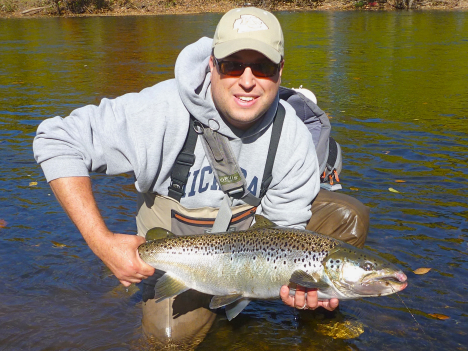
When he’s not behind a set of drums in a concert hall, jazz club, or recording studio, Ben Bilello can be found either on the water or behind the vise. While he’s an avid trout fisherman and fly tyer, Ben’s true fly fishing and tying passion is the Atlantic salmon. Ben has pursued wild Atlantic salmon in New Brunswick, Quebec, Nova Scotia, and Russia; landlocked salmon in New York and Vermont, and broodstock Atlantic salmon in Connecticut.
Ben has written for The Atlantic Salmon Journal and The Fly Fishing Journal. In addition to writing, a collection of Ben’s classic and artistic salmon flies are featured in Michael Radencich’s book “Classic Salmon Fly Patterns: Over 1700 Patterns From the Golden Age of Tying,” the largest illustrated compendium of Atlantic salmon flies published to date. Ben’s work can be seen at his website www.benbilello.com/salmonflies and on his salmon fly blog
Ben Bilello
For anglers in Connecticut, broodstock Atlantic salmon fishing is one most reliable ways to catch a large fish in fresh water. For anglers who fish for sea-run Atlantic salmon in Canada or Europe, the broodstock fishery is a good way to practice presentation close to home and for a minimal investment. For anglers new to Atlantic salmon fishing, this fishery is a great way to learn the techniques used to catch Atlantic salmon around the world.
Topics covered in Ben’s presentation include:
Locations of the fishery (Shetucket and Naugatuck Rivers)
Regulations
Equipment: fishing with one and two handed rods
Identifying salmon lies and typical holding water
Salmon behavior
Fishing strategies: wet fly, dry fly, tube flies, and riffling hitch
Fly selection
Fishing in a rotation
Fighting, landing and the safe release of salmon
Pizza and beverages will be available at 7:00 pm, followed by the 50/50 raffle, chapter business and Ben’s presentation. Don’t miss this first gathering of the new year.